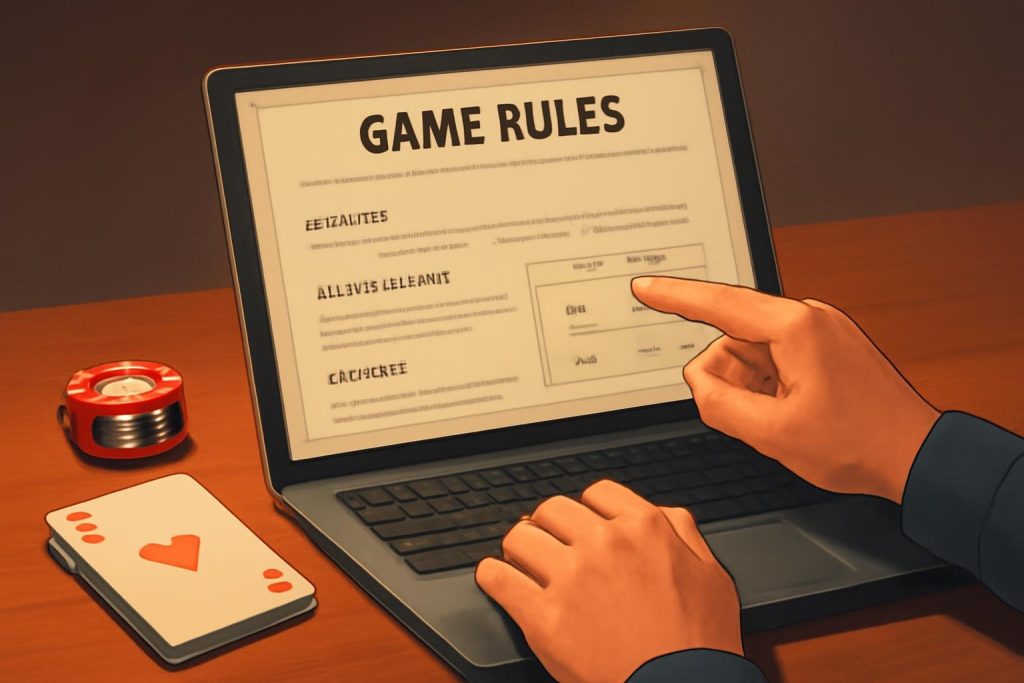

You open a table game, pick a seat, and see a wall of small-print rules. Before you tap “deal,” take a minute to check what the screen actually says. A game’s name tells you only part of the story; payouts, optional bets, and even the dealer’s procedure can vary between versions.
This quick guide shows you what to look for in a casino table game’s rules, so you can understand the format before risking a stake. It’s for learning the rules, not predicting results.
Start with the main objective and turn sequence
First, find the short explanation of how a round is won or settled. Then check the order of play. Does the game compare your hand with a dealer’s, ask you to choose from several actions, or settle wagers against a fixed set of outcomes?
That distinction affects what you’ll need to decide. In baccarat, for instance, the rules explain the Player and Banker hand options and when cards are drawn. You don’t make a choice after every card. A plain-language introduction to baccarat basics can help you recognize the game’s flow before you sit down.
Look for details about ties, too. A tie might push a particular wager, pay according to a stated rate, or be treated differently depending on the bet. Don’t assume the word “tie” means the same thing for every option on the table.
Check the payout for each wager
Find the payout table and read the row for the bet you intend to make. A payout written as “1 to 1,” for example, describes a different return from “2 to 1.” Check whether the displayed amount includes your original stake or describes winnings in addition to it; interfaces and wording can differ.
Also check which outcomes qualify. A payout may apply only to a particular hand, combination, or result. If the game offers several betting areas, don’t assume they share the same terms just because they’re on one screen.
Separate the main game from side bets
Side bets are optional wagers with their own conditions. They can be settled separately from the main bet, and their rules may use different outcomes or payouts. Find out what triggers the side bet, when it’s settled, and whether it remains active if your main wager loses.
If the rules use unfamiliar labels, check the game’s glossary rather than guessing. Baccarat terms such as “natural” or “commission” have specific meanings in that game; the site’s baccarat terminology guide is one example of how a rules glossary can clarify table language.
Find the limits and any special conditions
Check the minimum and maximum stake shown for the table or individual betting area. A table’s limit can affect which wagers you’re able to place, and the displayed limits may differ between games or versions. Make sure you understand the unit being shown before confirming a bet.
Next, scan for rules that change how an outcome is handled. Look for phrases about what happens when there’s a tie, when a hand is void, or when a round is interrupted. In a card game, check how the dealer acts and whether the player has choices such as drawing, standing, splitting, or doubling. Don’t infer those options from another game you’ve played.
Use a short pre-play checklist
- Can you explain the goal of a round in one sentence?
- Do you know when your bet wins, loses, or is returned?
- Have you checked the payout for the specific wager you plan to make?
- Are side bets optional, and do you understand their separate conditions?
- Have you checked the table limits and the dealer’s procedure?
- Can you find the full rules again if a question comes up?
If one answer is no, pause and open the help panel before placing a bet. A broad overview of casino table games can help you compare formats, but the rules shown for the exact game you’ve opened should guide your decisions.
When the rules still aren’t clear
Don’t rely on a quick guess or on a rule you remember from a different table. Look for a full-rules link, a glossary, or a practice mode with no real-money stakes. If the interface doesn’t explain a payout or condition clearly, choosing not to play is a reasonable option.
Before you start, set a spending limit you can afford to lose and a time limit for the session. Understanding a game helps you follow what’s happening; it doesn’t remove the chance of losing.
